
What Is a Smart Hotel? Everything Hotel Leaders Need to Know
The hospitality industry is rapidly evolving as hotels embrace intelligent technologies to improve guest experiences, streamline operations, and remain competitive in an increasingly digital world. One of the most significant developments driving this transformation is the rise of the Smart Hotel.
A Smart Hotel leverages connected technologies, automation, data, and intelligent systems to create a seamless experience for guests while optimizing operational efficiency behind the scenes. From smart guest rooms and contactless services to energy management and predictive maintenance, these technologies are reshaping the way hotels operate.
But becoming a Smart Hotel is about far more than installing connected devices. It requires a strategic approach that aligns technology investments with business objectives, guest expectations, and long-term operational goals.
In this guide, we explain what defines a Smart Hotel, the technologies behind it, the benefits it delivers, and why strategic planning is essential for successful digital transformation in hospitality.
Introduction
The hospitality industry is undergoing a profound digital transformation, with Smart Hotel technologies redefining how hotels operate and how guests experience their stay. At the heart of this evolution is the Internet of Things (IoT), enabling hotels to connect guest rooms, building systems, operational platforms, and business intelligence into intelligent, data-driven environments.
From personalized guest experiences and automated room controls to predictive maintenance and energy optimization, IoT is helping hotels improve operational efficiency while meeting the growing expectations of modern travelers. As technology continues to evolve, connected ecosystems are becoming a strategic advantage rather than a competitive luxury.
In this article, we explore how IoT is transforming hospitality, the technologies driving Smart Hotels, the business benefits they deliver, and the key considerations hotels should address when planning their digital transformation journey.
What Is a Smart Hotel?
A Smart Hotel is a hotel that uses connected technologies, Internet of Things (IoT) devices, automation, artificial intelligence, and integrated business systems to improve both guest experiences and operational performance.
Rather than relying on isolated technologies, Smart Hotels create an interconnected digital ecosystem where guest rooms, building management systems, hotel operations, security, energy management, and business applications communicate seamlessly.
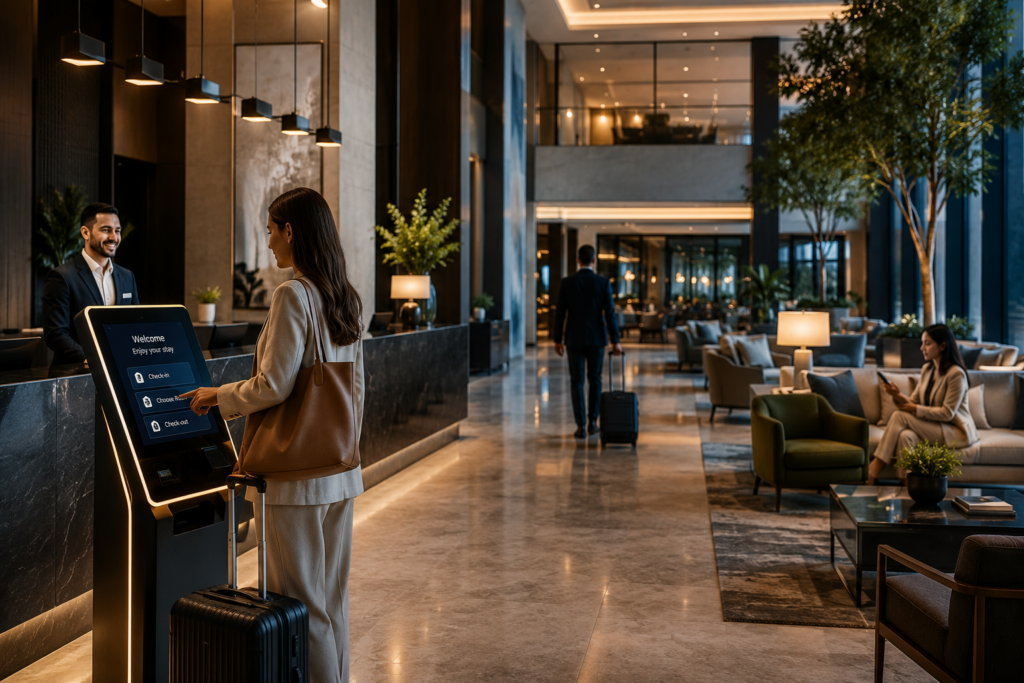
For guests, this means greater comfort, convenience, and personalization. They may adjust room settings through a mobile app, enjoy contactless check-in, access digital room keys, or receive personalized services based on their preferences.
For hotel operators, Smart Hotel technologies provide real-time visibility into hotel performance, automate routine processes, reduce operating costs, improve sustainability, and support faster, data-driven decision-making.
Ultimately, a Smart Hotel combines technology, people, and processes to deliver a more efficient operation while creating exceptional guest experiences.
A Smart Hotel is not defined by individual technologies—it is defined by how those technologies work together to create a connected, intelligent, and guest-centric hospitality ecosystem.
Key Technologies Behind Smart Hotels
Smart Hotels combine multiple technologies into one connected ecosystem that enhances guest experiences, improves operational efficiency, and supports long-term digital transformation. While every property has unique requirements, the following technologies form the foundation of most modern Smart Hotel environments.
Smart Guest Rooms
Smart guest rooms allow visitors to personalize their stay through connected technologies. Lighting, temperature, curtains, entertainment systems, and room access can be controlled using mobile devices, voice assistants, or centralized room controls, creating a more comfortable and convenient experience while improving operational efficiency.
Internet of Things (IoT)
IoT connects sensors, devices, and hotel systems that continuously exchange data in real time. These connected technologies enable hotels to automate processes, monitor operations, optimize maintenance, and improve decision-making across the entire property.
Building Management Systems (BMS)
Building Management Systems integrate critical infrastructure such as HVAC, lighting, elevators, and energy controls into one centralized platform. Intelligent automation helps hotels reduce energy consumption, improve guest comfort, and simplify facility management.
Hotel Systems Integration
Artificial intelligence and business analytics help hotels transform operational data into valuable insights. From demand forecasting and predictive maintenance to personalized guest services, AI enables faster, smarter decisions across hotel operations.
Artificial Intelligence & Analytics
Artificial intelligence and business analytics help hotels transform operational data into valuable insights. From demand forecasting and predictive maintenance to personalized guest services, AI enables faster, smarter decisions across hotel operations.
Cybersecurity
As hotels become increasingly connected, protecting digital infrastructure becomes essential. Cybersecurity strategies safeguard guest information, connected devices, operational systems, and business continuity while ensuring compliance with industry standards.
A Smart Hotel is not powered by a single technology. Its success comes from integrating multiple intelligent systems into one secure, connected, and scalable digital ecosystem.
Benefits of Smart Hotels
Smart Hotel technologies deliver value far beyond automation. By connecting guest services, operational systems, and business intelligence into a unified digital ecosystem, hotels can improve efficiency, reduce operating costs, and create exceptional guest experiences.
The benefits extend across every department—from front office and housekeeping to engineering, food & beverage, and executive management.
Enhanced Guest Experiences
Modern travelers expect convenience, personalization, and seamless digital interactions. Smart Hotels enable guests to enjoy contactless check-in, digital room keys, personalized room settings, and connected in-room services that create a more comfortable and memorable stay.
Improved Operational Efficiency
Automation reduces repetitive manual tasks while enabling hotel teams to work more efficiently. Connected systems improve communication between departments, accelerate response times, and streamline daily operations across the property.
Greater Sustainability
Smart technologies help hotels monitor energy consumption, water usage, and equipment performance in real time. These capabilities support environmental initiatives, improve resource utilization, and contribute to long-term sustainability goals.
Better Business Decisions
Connected technologies generate valuable operational data that can be transformed into actionable insights. Hotel leadership gains better visibility into occupancy trends, operational performance, guest preferences, and technology utilization, enabling faster and more informed decision-making.
Future-Ready Operations
Hotels that invest in scalable Smart Hotel strategies are better prepared to integrate new technologies, respond to changing guest expectations, and adapt to future business challenges without repeatedly replacing core technology infrastructure.
Smart Hotels create business value by combining technology with strategy. The goal is not simply to automate operations, but to build an intelligent hospitality environment that continuously improves guest experiences and operational performance.
Challenges of Becoming a Smart Hotel
While Smart Hotel technologies offer significant advantages, successful implementation requires careful planning, the right technology strategy, and a long-term vision. Hotels should focus not only on adopting new technologies but also on ensuring they integrate seamlessly with existing operations and support measurable business objectives.
Understanding these challenges early helps reduce implementation risks while creating a stronger foundation for long-term digital transformation.
Integrating Legacy Systems
Many hotels still rely on legacy Property Management Systems (PMS), Building Management Systems (BMS), and operational platforms that were not originally designed to support modern connected technologies. Successful Smart Hotel initiatives require careful integration planning to avoid operational disruption and maximize the value of existing technology investments.
Cybersecurity & Data Privacy
As hotels connect more devices and digital services, cybersecurity becomes increasingly important. Protecting guest information, connected devices, operational systems, and business data requires secure network architecture, continuous monitoring, and clearly defined security policies.
Choosing the Right Technologies
The hospitality technology market continues to grow rapidly, making technology selection increasingly complex. Hotels should evaluate solutions based on business requirements, interoperability, scalability, and long-term vendor support rather than focusing solely on product features.
Staff Adoption & Training
Technology only delivers value when employees know how to use it effectively. Successful Smart Hotel projects include change management, staff training, and operational processes that encourage adoption across every department.
Scalability
Hotels should implement technologies that can evolve alongside future business needs. Scalable architectures make it easier to introduce new services, expand to additional properties, and adopt emerging innovations without replacing existing technology investments.
Measuring Return on Investment
Every Smart Hotel initiative should deliver measurable business value. Establishing clear performance indicators helps hotels evaluate improvements in guest satisfaction, operational efficiency, sustainability, maintenance performance, and overall financial return.
Successful Smart Hotels are built on strategy—not technology alone. The greatest long-term value comes from connecting the right technologies with clear business objectives, operational excellence, and continuous innovation.
Is Every Hotel Becoming a Smart Hotel?
The hospitality industry is steadily moving toward a more connected and intelligent future. While not every hotel will implement the same technologies at the same pace, the direction is clear: digital transformation is becoming a business necessity rather than a competitive advantage.
Today’s guests expect seamless digital experiences, personalized services, reliable connectivity, and sustainable operations. At the same time, hotel operators face increasing pressure to improve efficiency, reduce costs, optimize resources, and respond quickly to changing market conditions.
For many hotels, becoming “smart” does not require a complete technology overhaul. Instead, it involves adopting the right technologies in phases, integrating them strategically, and building a scalable digital foundation that supports future growth.
The most successful Smart Hotels are not necessarily those with the most technology—they are the ones that implement technology with a clear business purpose, ensuring every investment improves both guest experiences and operational performance.
The future of hospitality is not about adding more technology—it is about making technology work together to create better guest experiences, smarter operations, and stronger business outcomes.
Frequently Asked Questions
What is a Smart Hotel?
A Smart Hotel uses connected technologies, automation, IoT devices, and integrated systems to improve guest experiences, streamline hotel operations, and support data-driven decision-making across the property.
What technologies are commonly used in Smart Hotels?
Smart Hotels typically combine IoT devices, smart guest room controls, building management systems (BMS), property management systems (PMS), hotel systems integration, artificial intelligence, business intelligence, and cybersecurity solutions to create connected hospitality environments.
Do Smart Hotels reduce operating costs?
Yes. Smart technologies help hotels optimize energy consumption, automate repetitive tasks, improve maintenance planning, and increase operational efficiency, resulting in lower operating costs over time.
Can existing hotels become Smart Hotels?
Absolutely. Most existing hotels can introduce Smart Hotel technologies gradually through phased modernization projects. Integrating new technologies with existing systems allows hotels to improve operations without requiring a complete redevelopment.
Why is technology strategy important for Smart Hotels?
A technology strategy ensures that Smart Hotel investments align with business objectives, integrate effectively with existing systems, remain scalable for future growth, and deliver measurable business value rather than isolated technology improvements.
Conclusion
Smart Hotels represent the next evolution of hospitality, combining connected technologies, intelligent automation, and data-driven decision-making to create exceptional guest experiences while improving operational performance.
However, technology alone is not enough. Long-term success depends on strategic planning, seamless systems integration, strong cybersecurity, and a clear understanding of business objectives before technology investments are made.
Whether upgrading an existing property or designing a new hotel, organizations that adopt a structured Smart Hotel strategy will be better positioned to improve efficiency, strengthen competitiveness, and meet the evolving expectations of modern travelers.
READY TO BUILD A SMART HOTEL?
Start Your Smart Hotel Transformation with Confidence
Planning a Smart Hotel requires more than selecting the latest technologies. Beyond IT Consulting helps hotels develop technology strategies, evaluate solutions, integrate systems, and design intelligent hospitality environments that are secure, scalable, and aligned with long-term business goals.